

How to Choose the Best Car Seat Covers in the UAE Climate (2026 Guide)
If you’ve ever climbed into a car that’s been parked under the Sharjah sun for an hour, you already know why seat covers here aren’t just a styling choice — they’re a necessity. With summer temperatures regularly exceeding 45°C, fine desert dust, and near-constant sun exposure, few climates put a car’s interior through more stress than the UAE. The right seat covers can protect your upholstery, keep the cabin more comfortable, and add years to your interior’s lifespan. Here’s what you should look for in 2026.
1. Heat Resistance Is Non-Negotiable
Genuine leather is especially vulnerable when temperatures climb into the mid-40s. Over time, excessive heat can cause it to dry out, crack, and lose its texture. If you’re keeping leather seats, protective covers aren’t optional — they’re preventative maintenance.
Look for:
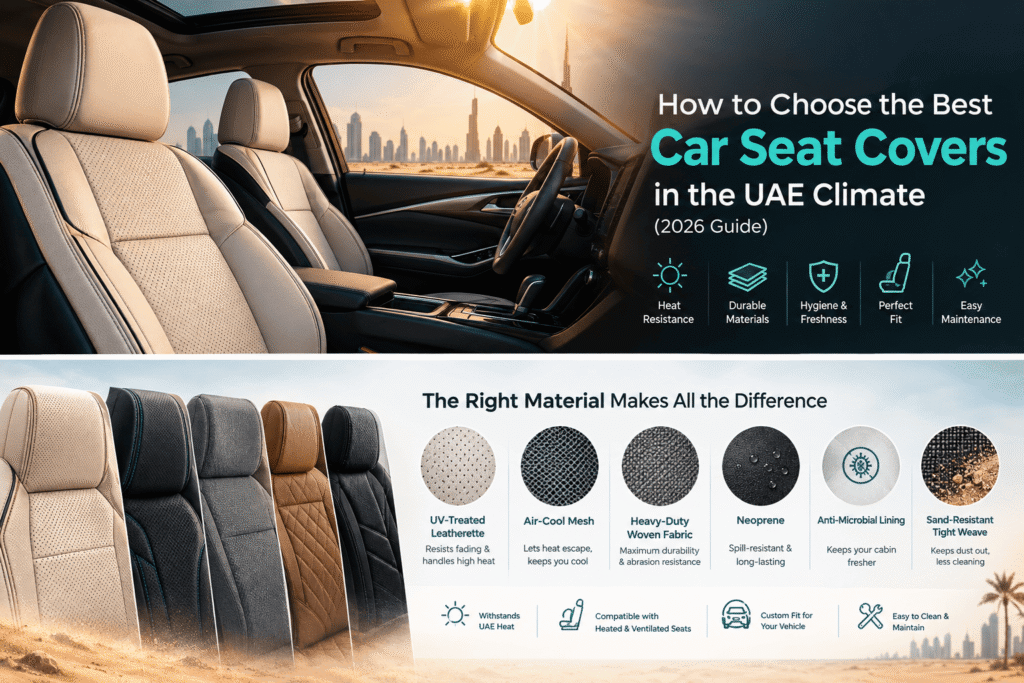
- UV-treated polyester or leatherette — resists fading and won’t break down as quickly under prolonged sun exposure.
- Perforated or air-cool mesh panels — a growing trend in newer seat cover designs, these are designed to let heat escape rather than trap it against the seat.
- Light or neutral tones — darker covers absorb noticeably more heat than lighter ones.
2. Material: What’s Actually Changed?
The material landscape has shifted somewhat over the last couple of years:
- Treated polyester remains the sweet spot for most drivers. It’s breathable and durable, holds its color well, and handles UAE conditions without the maintenance demands of leather.
- Memory foam with air-cool mesh is now common in mid- to premium-range covers, adding cushioning without trapping heat like older padded designs.
- Heavy-duty woven fabrics — originally designed for rugged outdoor use — are increasingly being used in seat covers marketed for extreme heat and abrasion resistance. They’re a good option if maximum durability is your priority.
- Neoprene still holds up well against spills and daily wear. However, cheaper versions can trap heat, so it’s worth looking for ventilated variants.
3. Look for Anti-Microbial and Sand-Resistant Features
Two features worth prioritizing, but which aren’t always mentioned, are:
- Anti-microbial lining — with the heat and humidity in the UAE, bacteria and odor buildup can occur more quickly than in milder climates. A treated lining can help keep the cabin fresher.
- Sand-resistant, tight-weave fabric — fine desert sand can work its way into loosely woven materials and can be genuinely difficult to clean. A tighter weave can save you a lot of vacuuming in the long run.
4. Check Compatibility With Heated or Ventilated Seats
If your car has heated or ventilated seats, cover thickness matters more than most buyers realize. A thick, unperforated cover can noticeably reduce how effectively these features work.
Look specifically for covers labeled as compatible with heated or ventilated seats, or choose perforated designs that are thin enough to allow airflow and heat to pass through properly.
5. Fit Is as Important as Material
A cover that isn’t designed for your exact seat shape can shift, bunch up, and wear unevenly, regardless of how good the material is. Custom, vehicle-specific fitting provides a factory-installed look and offers better protection for your seats.
A slip-on universal cover may seem like a cheaper option, but it is rarely worth the long-term compromise in fit, appearance, and durability.
6. What Does Each Material Actually Cost?
Price is often where the decision comes down to, so here’s a rough idea of what you can expect to pay for a full set in the Sharjah/UAE market:
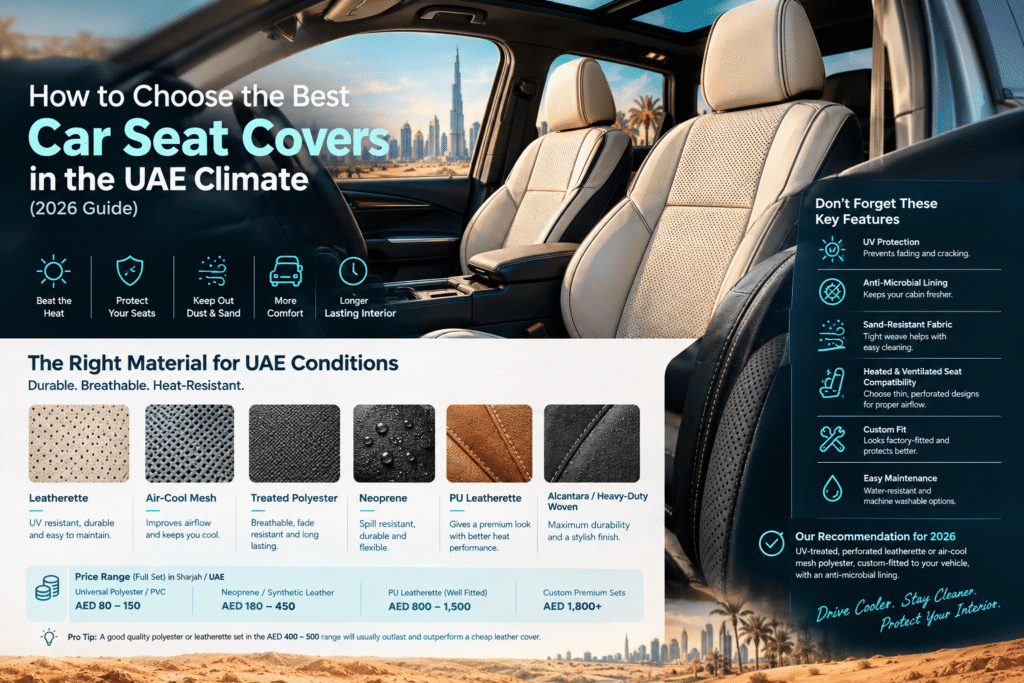
- Universal polyester or PVC (budget) — around AED 80–150. These are fine as a short-term solution, but the fit is generic, and the material may not hold up well under daily sun exposure.
- Semi-custom neoprene or synthetic leather (mid-range) — typically AED 180–450. These offer a noticeably better fit and UV resistance than budget options and are a solid choice for daily drivers who want protection without a major investment.
- Semi-custom PU leatherette, properly fitted — usually AED 800–1,500 for a full set. This is where many drivers land if they want the look of genuine leather with easier maintenance and better heat performance.
- Fully custom, premium sets (leather, Alcantara-style fabric, or heavy-duty woven material) — starting at around AED 1,800 and increasing depending on the material and finish. Expect a tailored, factory-style fit and excellent long-term durability.
A useful rule of thumb: a well-made polyester or leatherette set in the AED 400–500 range will usually outlast and outperform a cheap, low-grade leather cover at a similar price.
In the UAE heat, material quality matters more than the “leather vs. fabric” label alone. It’s worth investing in the right features — such as UV resistance, perforation, and anti-microbial treatment — rather than simply choosing the most premium-sounding material.
7. Easy Maintenance for Daily UAE Driving
Between sand, sunscreen, and daily wear, removable and machine-washable covers can save you a lot of time. Water-resistant materials also make quick cleanups possible without requiring a full detailing session every few weeks.
Our Recommendation for 2026
For UAE conditions, we recommend UV-treated, perforated leatherette or air-cool mesh polyester, custom-fitted to your vehicle, with an anti-microbial lining if you’re driving daily.
This combination offers an excellent balance of heat resistance, hygiene, durability, and a premium look without the maintenance demands of genuine leather.
Get Expert Advice
At Beauty Village, we help car owners across Sharjah choose and professionally fit seat covers designed for real UAE conditions — not just showroom appearances.
Visit us for a consultation, and we’ll help you choose the right material and fit based on your car, driving habits, and preferences.
Comments
Be the first to share your thoughts.