

How to Choose the Right Car Mat for Your Vehicle
If you’ve ever shopped for car mats, you know the feeling. You open a marketplace app, type in your car’s name, and suddenly you’re staring at forty different options — all claiming to be “premium,” “waterproof,” and “perfect fit.” Half of them look identical except for the price tag. So how do you actually pick the right one?
I’ve been through this more times than I’d like to admit, between my own car and helping family members sort through the same confusion. Here’s what I’ve learned about cutting through the noise and picking a mat that actually works for your vehicle, your climate, and your daily grind.
Start With Fit, Not Looks
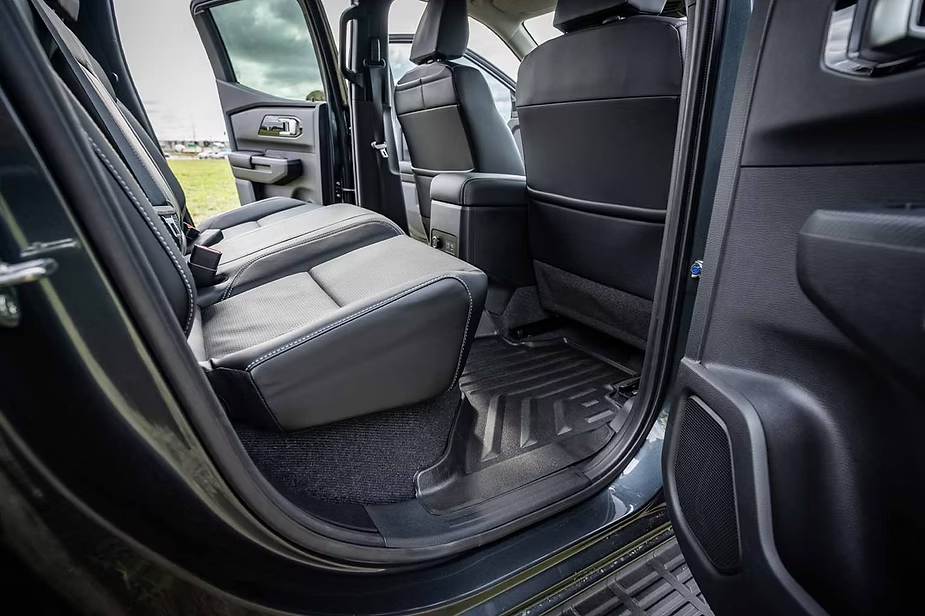
This is the single biggest mistake people make. A mat that looks great in the product photo but doesn’t sit flush in your footwell is worse than useless — it can actually bunch up under the pedals and become a safety hazard.
Car mats generally come in two flavors:
- Universal mats — cut to a generic size and trimmed (sometimes by you) to roughly fit most cars.
- Custom-fit mats — molded or cut specifically for your car’s make, model, and often the year, since footwell shapes change across generations.
Think About Your Climate and Terrain First
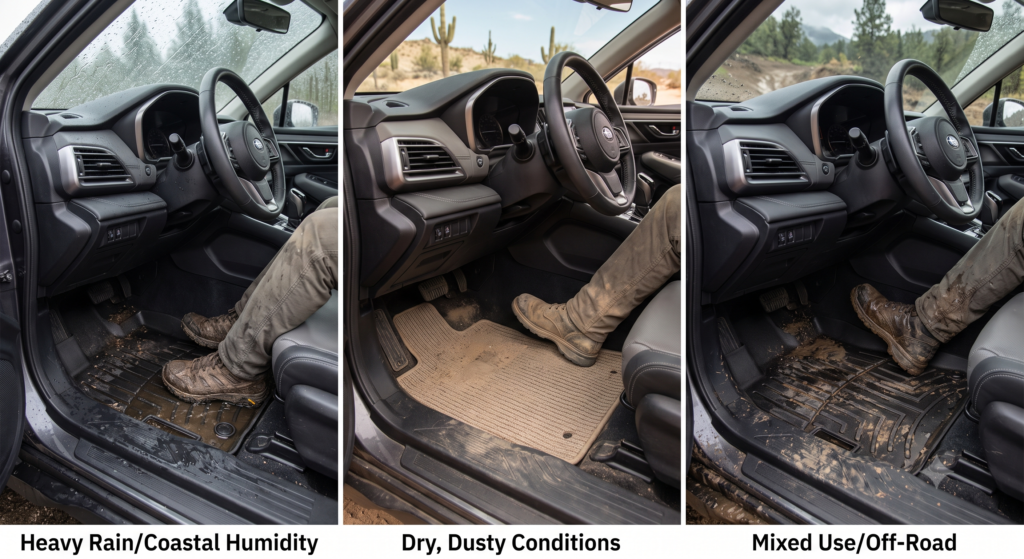
Where you drive matters more than what looks nice in a showroom.
- Heavy rain or coastal humidity — look for closed-cell rubber or PVC mats with raised edges that trap water and mud instead of letting it slosh around the cabin.
- Dry, dusty conditions — a looped or ribbed carpet mat that traps fine dust works better than a flat rubber sheet, which just lets dust slide around.
- Mixed use, city and occasional off-road — a hybrid tray-style liner with deep channels is worth the extra spend since it handles both mud and everyday spills.
If you’re constantly getting in and out with wet shoes, umbrellas, or work boots, rubber wins every time on practicality even if carpet looks more “finished.”
Material Trade-offs, Honestly
Rubber / PVC mats Durable, easy to hose down, resistant to stains and odor. The downside is they can look utilitarian and some cheaper versions have a strong chemical smell when new (let them air out before installing).
Carpet mats More comfortable underfoot, blend in with factory interiors, often what comes stock. But they hold onto moisture, dust, and smells longer, and they’re harder to clean properly without a vacuum and some elbow grease.
All-weather TPE mats A newer middle ground — flexible like rubber but with a more refined, less industrial look. Slightly pricier, but genuinely low-maintenance if you can find a reputable brand.
Check the Fixing Points
This one gets overlooked constantly. Many modern cars have anchor hooks or clips on the driver’s side floor specifically to lock the mat in place. If the mat you’re buying doesn’t have matching anchor holes, skip it — regardless of how good the fit otherwise seems. An unanchored driver’s mat is one of the more common (and preventable) causes of pedal entrapment incidents.
Don’t Ignore Thickness and Edge Height
A mat that’s too thick can interfere with pedal travel, especially in cars with limited footwell depth. Too thin, and it won’t contain spills or trap debris effectively. Raised edges (a lip of 1.5–3 cm is typical) make a real difference if you’re dealing with muddy shoes or the occasional spilled coffee.
A Simple Way to Decide
- Confirm your car’s exact make, model, and year — don’t rely on “it should fit most sedans.”
- Decide if custom-fit is within budget. If yes, always choose it over universal.
- Match the material to your actual daily conditions, not what looks best in photos.
- Confirm anchor point compatibility before buying.
- Check thickness and edge height against your footwell depth.
Final Thought
Car mats seem like a small, almost throwaway purchase — until you’re dealing with a slipping mat under the brake pedal or a mildew smell that won’t go away after monsoon season. Spending a bit more time getting the fit and material right upfront saves you from replacing a bad set within a year, and more importantly, keeps your footwell safe to drive on.
Comments
Be the first to share your thoughts.